For Patients & Caregivers : Reading time · 9 minutes
You’ve heard the words chronic kidney disease.Here’s what they actually mean.
If your doctor has told you that you have CKD — or that someone you love does — this page is written for you. Not in medical jargon. Not in fear. Just clearly, step by step, with the things you need to know now, the things you can do, and the things you can stop worrying about. Take it slowly. There’s no rush.
One in Seven
Indian adults are living with some stage of CKD
Most don’t know they have it. You knowing is already a good thing.
Most
People with CKD will never need dialysis
Especially when it’s caught early. Most people manage CKD for years with medication and lifestyle.
Delayable
CKD progression can be delayed — often dramatically
The right treatment, the right diet, and consistent follow-up make an enormous difference.
Chapter One · The basics
What CKD actually is.
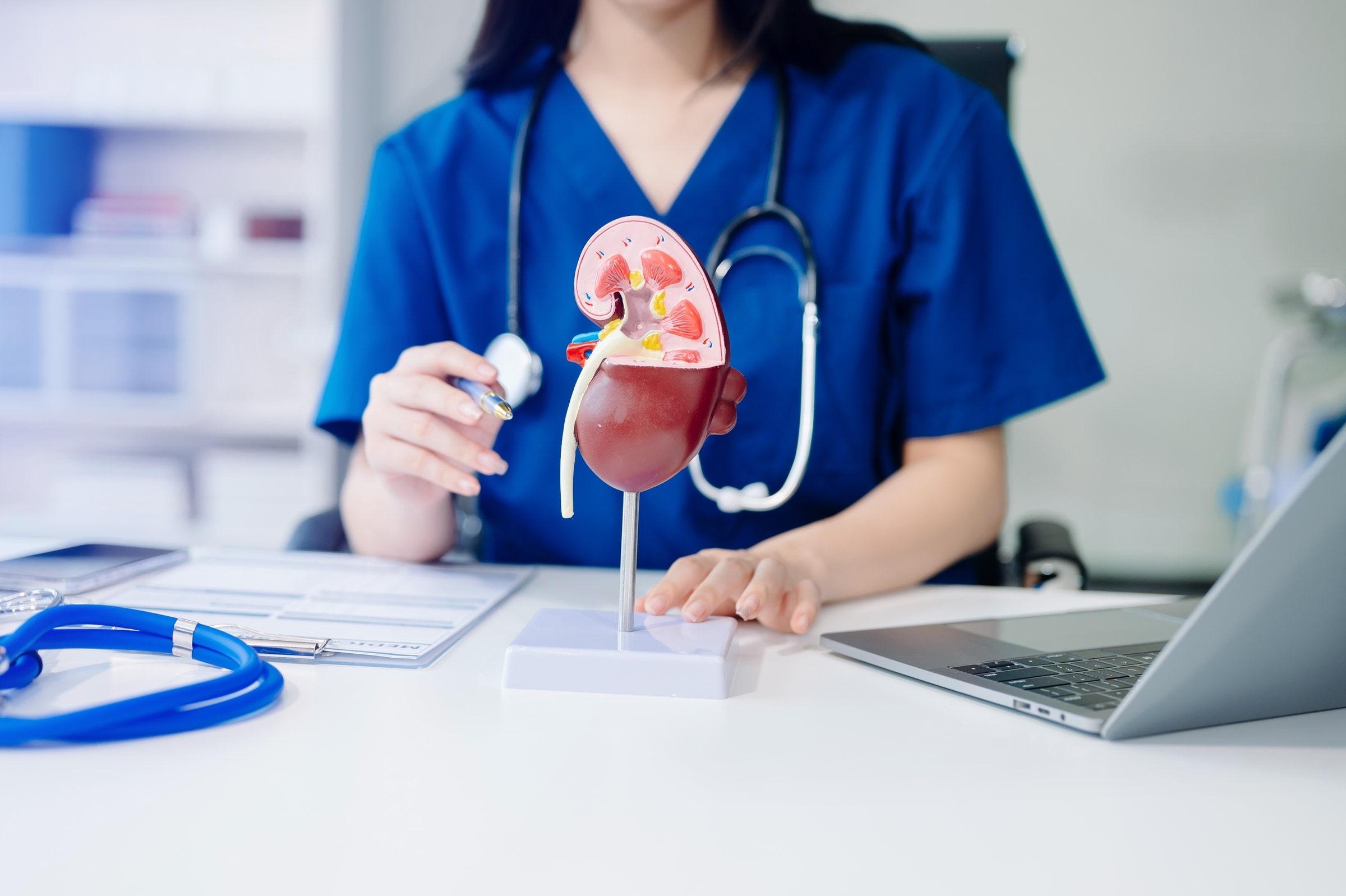
Chronic kidney disease — CKD — means that your kidneys are not working at their full capacity, and that this has been true for at least three months.
Your kidneys are two bean-shaped organs, each about the size of your fist, sitting at the back of your abdomen on either side of your spine. They are not glamorous organs. They do not feature in poetry. But they do an extraordinary amount of work every single day — quietly, in the background, while you go about your life.
Every minute, about a litre of your blood passes through your kidneys. They filter it, take out what your body doesn’t need, return what it does, and pass the waste out as urine. Over twenty-four hours, that’s nearly 1,500 litres of blood filtered. It is one of the most important and one of the most invisible jobs in your body.
“Chronic kidney disease” simply means that this filtering machinery is no longer working at full capacity. That can range from very mild — almost no symptoms, almost no impact on daily life — to severe enough that the kidneys need help to do their job. Where you sit on that range matters enormously. We’ll come to that.
Dialysis — Your Options, Explained.
When kidneys can no longer do their job, dialysis steps in as your artificial kidney. Modern dialysis offers more choices than ever — and at AKC, every choice is delivered to one uncompromising standard.
When Kidneys Need Support: Understanding Dialysis
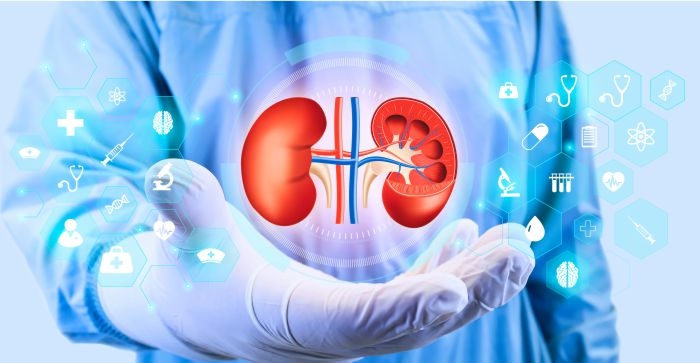
When chronic kidney disease reaches its most advanced stage — CKD Stage 5, also called End-Stage Renal Disease — the kidneys can no longer filter waste and excess fluid from the blood on their own. Dialysis is your artificial kidney, taking over what nature can no longer do.
There are two broad paths: Hemodialysis, where blood is filtered through a machine, and Peritoneal Dialysis, where filtration happens inside your own abdomen. Within hemodialysis itself, there are four modalities — each suited to different lives, lifestyles, and clinical needs.
The right choice depends on you. This page explains each option, what it offers, and who it suits best — so you and your nephrologist can decide together.
Path One · Detailed below
Hemodialysis (HD)
Blood is filtered outside the body through a specialised machine and dialyser. Performed at a centre or, in some cases, at home. Four distinct modalities.
Path Two · Brief overview
Peritoneal Dialysis (PD)
Filtration happens inside your abdomen, using your peritoneal membrane as the filter. Done at home, daily. Suited to select patients based on clinical suitability.
For Patients & Caregivers : Reading time · 12 minutes
Your vascular accessis your lifeline.
Every hemodialysis session depends on one thing: a working access where the machine can connect to your bloodstream. Without it, dialysis isn’t possible. With the right one, well planned and well cared for, dialysis becomes part of life that fades into the background. This page explains every type of access — how it’s made, when it’s made, what can go wrong, and what you can do daily to protect it.
Patient Education · Treatment Options
Kidney Transplant — A New Beginning.
For most patients with end-stage kidney disease, a transplant offers something dialysis cannot — a return to a fuller, freer life. This is the story of that journey, and how AKC walks it with you from the first conversation to a lifetime beyond.
Why Transplant
Often the best long-term answer to end-stage kidney disease.
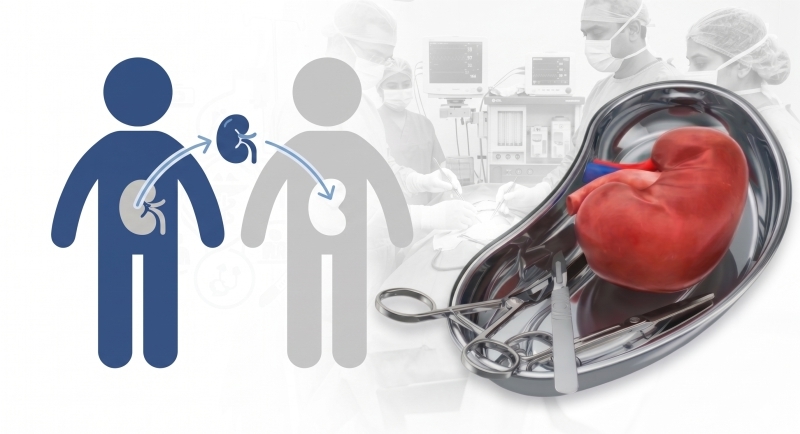
A successful kidney transplant restores something that no dialysis machine can fully replicate — continuous, physiological filtration, twenty-four hours a day, performed by a living organ.
Compared to lifelong dialysis, transplantation generally offers longer survival, better quality of life, freedom from the dialysis schedule, fewer dietary restrictions, and the return of energy that patients often had given up on.
It is not the right path for every patient, and it is not without its own work. But for those who are candidates, it is often the single most consequential medical decision they will make.
Read more about TransplantSurvival benefit
Quality of life
Time on machine
Patient Education · Treatment Options
“Eat Healthy, Eat to Protect your Kidneys, Eat to Enjoy Life.”
A kidney disease diagnosis does not mean a lifetime of bland, joyless eating. At AKC, our renal dietitians craft personalised menus that are medically precise, culturally familiar, and — above all — genuinely delicious. Your kidneys and your taste buds can both be happy.