Incentre Dialysis
The Four Hemodialysis Modalities
Four ways the same machine can change a life.
Every modality below filters your blood. What differs is how thoroughly, how often, and where and those differences matter.
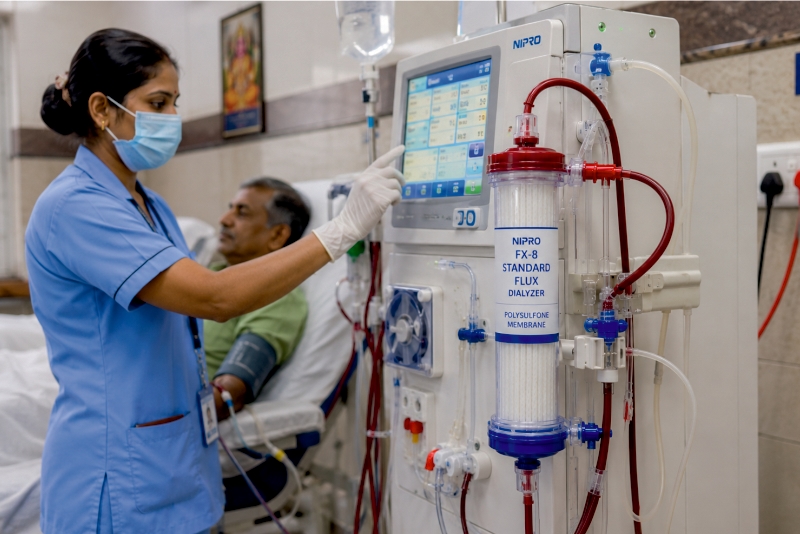
Standard Flux HD
The proven, foundational dialysis. Widely accessible, reliably effective for small-solute clearance.
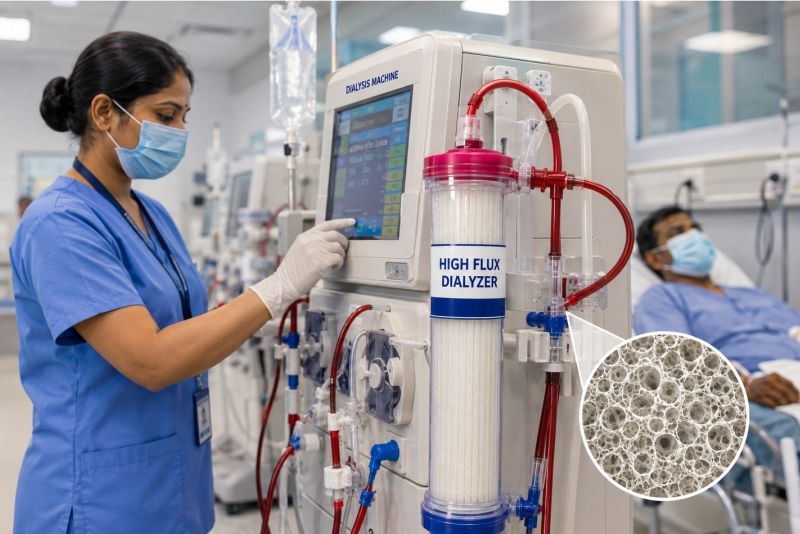
High Flux HD
Larger pore membranes clear more of the toxins that smaller pores miss for better long-term outcomes.
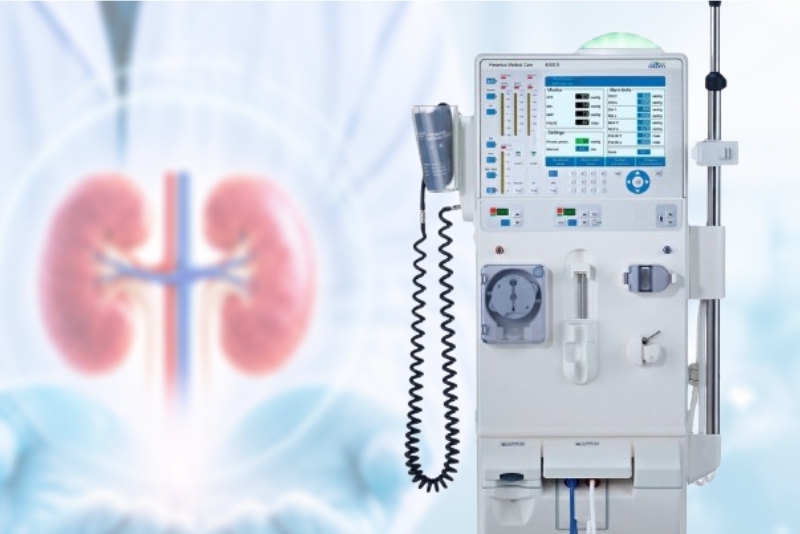
Hemodiafiltration (HDF)
The most advanced in-centre modality. Combines diffusion and convection for the deepest clearance.
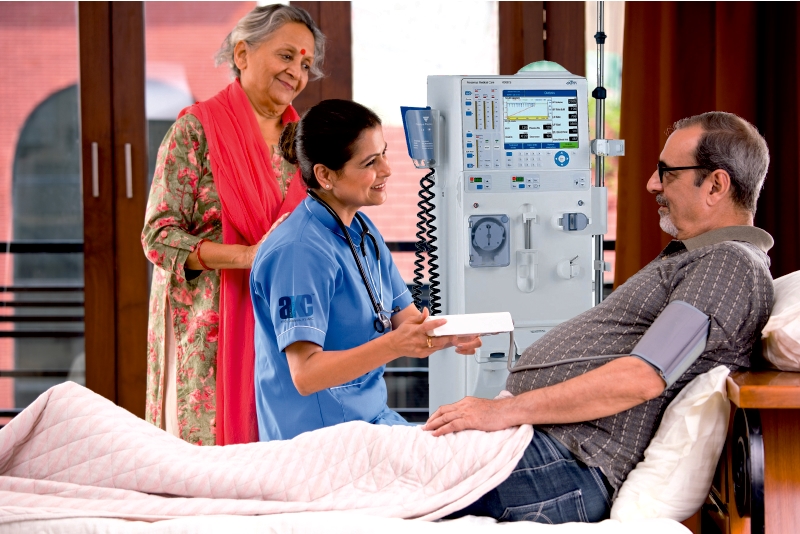
CRRT
Continuous kidney support for critically ill patients. Gentle, ongoing therapy designed to manage fluid and waste when conventional dialysis may not be suitable.
The Proven Foundation
Standard Flux Hemodialysis
The most widely practised form of dialysis worldwide effective, accessible, and the bedrock of life-saving renal care.
Standard flux hemodialysis uses a dialyser with smaller pore-size membranes. Through diffusion, small waste molecules urea, creatinine, potassium, phosphate pass from your blood into the dialysate fluid, where they are carried away. Excess fluid is removed by ultrafiltration.
It is the modality that built modern nephrology. Decades of evidence show that, when delivered to high standards of adequacy, water purity, and vascular access care, standard flux HD reliably extends and improves life for the great majority of patients who depend on it.
- Patients newly starting dialysis
- Stable, well-tolerated long-term care
- Settings prioritising accessibility
- Initial therapy before modality optimisation
A Wider Window of Clearance
High Flux Hemodialysis
A meaningful step forward. Larger-pore membranes clear toxins that standard flux cannot reach with measurable benefits over the long term.
High flux hemodialysis uses dialysers with larger membrane pores, allowing the clearance of middle molecules toxins like beta-2 microglobulin that build up over years of dialysis and contribute to long-term complications such as dialysis-related amyloidosis, cardiovascular disease, and bone problems.
For patients on dialysis for many years, the cumulative benefit of clearing these middle molecules can be significant. International guidelines increasingly favour high flux membranes wherever water purity and adequacy can be assured.
- Long-term dialysis patients (years on therapy)
- Patients with cardiovascular comorbidities
- Patients with bone-mineral concerns
- Standard practice when conditions allow
The Deepest Clearance Available In-Centre
Hemodiafiltration HDF
The most advanced in-centre modality. Two filtration mechanisms working together with growing evidence of improved survival and quality of life.
HDF combines two filtration mechanisms in a single session. Diffusion (as in conventional HD) removes small molecules. Convection achieved by pushing large volumes of ultra-pure substitution fluid through the dialyser sweeps out a much broader range of middle and larger molecules.
Landmark European trials (CONTRAST, ESHOL, Turkish OL-HDF) have demonstrated that high-volume online HDF can improve survival, blood pressure stability, intra-dialytic tolerability, and patient-reported quality of life compared with conventional HD.
HDF requires an HDF-capable machine, ultra-pure water, and trained staff. It is, in many parts of Europe, the standard of care. It is increasingly available in India and we believe it should be more widely so.
- Patients seeking the best in-centre outcomes
- Younger patients with long anticipated dialysis vintage
- Patients with intra-dialytic hypotension
- Patients with cardiovascular risk burden
Continuous Renal Replacement Therapy
CRRT Procedure
A continuous, gentle form of renal replacement therapy designed for critically ill patients who need ongoing support when conventional dialysis may not be well tolerated.
CRRT provides continuous removal of excess fluid, waste products and electrolytes from the blood. Unlike conventional hemodialysis, it works gradually over an extended period, making it particularly suitable for critically ill patients who may not tolerate rapid fluid or solute shifts.
The therapy can help maintain fluid balance and support kidney function in patients with acute kidney injury, severe fluid overload or haemodynamic instability. Treatment parameters are carefully adjusted according to the patient's condition, fluid requirements and clinical needs.
CRRT requires close monitoring throughout the treatment. A specialised multidisciplinary team manages the therapy, monitors vital parameters and makes necessary adjustments to ensure safe and effective renal support.
- Critically ill patients with acute kidney injury
- Patients with haemodynamic instability
- Patients with severe fluid overload
- Patients requiring gradual and continuous fluid removal
At a Glance
Four modalities, side by side.
| Standard Flux HD | High Flux HD | HDF | CRRT | |
|---|---|---|---|---|
| Frequency | 3× per week | 3× per week | 3× per week | Continuous · 24 hours/day |
| Session length | ~4 hours | ~4 hours | ~4 hours | Continuous · typically ≥24 hours |
| Setting | AKC centre | AKC centre | AKC advanced centre | AKC Centre |
| Small-solute clearance | Excellent | Excellent | Excellent | Excellent · continuous |
| Middle-molecule clearance | Limited | Improved | Highest in-centre | High · especially with convection |
| Cardiovascular benefit | Baseline | Improved over standard | Strongest evidence base | Excellent haemodynamic tolerance |
| Patient lifestyle | Centre-based routine | Centre-based routine | Centre-based routine | ICU-based · for critically ill patients |
| Training required | None | None | None | Specialised ICU & nephrology team |
"Disclaimer - The information provided is for general awareness only and should not replace professional medical advice. Always consult your nephrologist for guidance specific to your condition."
A Brief Note on the Other Path
Peritoneal Dialysis filtration from within.
For select patients, Peritoneal Dialysis (PD) offers an alternative path altogether using the peritoneal membrane inside your own abdomen as the natural filter, performed at home through daily exchanges or an overnight cycler. Based upon clinical suitability, our nephrologists actively facilitate the adoption of PD where it is the right fit. A dedicated PD page is being prepared as part of this patient-education series.
The AKC Standard
Whichever modality you choose, the standard does not change.
i. Validated adequacy
Every session measured against Kt/V and URR targets. Adequacy is not assumed it is audited.
ii. Ultra-pure water
Water purification monitored to international standards. Because high flux and HDF are only as good as the water that supports them.
iii. Trained technicians
Every AKC technician is structured-curriculum trained, periodically re-certified, and held to the same protocols across every centre.
iv. Vascular access care
Dedicated pathways for fistula creation, surveillance, and salvage because your access is your lifeline.
Your Next Step
The right modality is a conversation.
Let's start it.
Speak with an AKC nephrologist, find a centre near you, or download our patient guide to share with your family.
For quick contact :
74000 95950 | info@apexkidneycare.com
Disclaimer: The information provided is for general awareness only and should not replace professional medical advice. Always consult your nephrologist for guidance specific to your condition.